Showing posts with label basics. Show all posts

Friday, August 27, 2010

A Tomato Trick

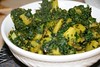
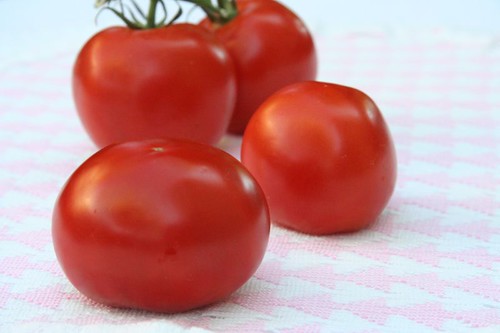
Good local tomatoes are starting to come into the market now, and while the heirlooms and other colorful ones are excellent for using raw, the red ripe ones for me mean dishes that depend on the juicy tomato taste, such as gravy wallah sabjees, rajma, and many other things.

Tomatoes

I am quite a fan of silky smooth tomato puree in certain dishes, and even a bit finicky about large bits of tomato skin floating carelessly in some dishes. So naturally, I have to go the longer route to get the result. The best way to make a large batch of tomato puree is to bring a pot of water to boil, drop in the tomatoes for about a minute, then remove them with a slotted spoon. When they are cool enough to handle, they can be peeled off easily, then cored, chopped, and pureed in a food processor.

Sometimes, however, you don't need a lot of puree, perhaps just enough from a tomato or two, and so this process can get a bit cumbersome. For such times, turn to the wisdom of women like Madhur Jaffrey, Niloufer Ichaporia, and many knowledgeable home cooks. Just use a regular grater.

With a paring knife, make a small cross on the smooth end of the tomato. Hold the tomato at the stem end, and using the medium holes of the box grater, grate the tomato into a bowl. The skin will practically stay in your hand, and you will have fresh tomato puree in seconds, ready for use.

Illustrated below in pictures.
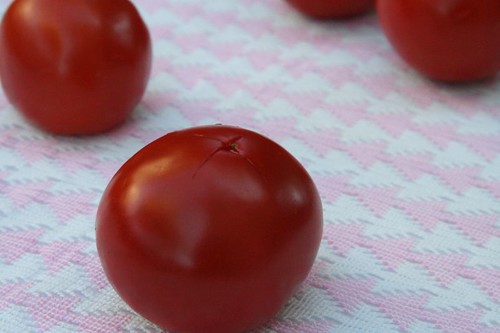
Tomato

Scoring an 'X' on the tomato before grating
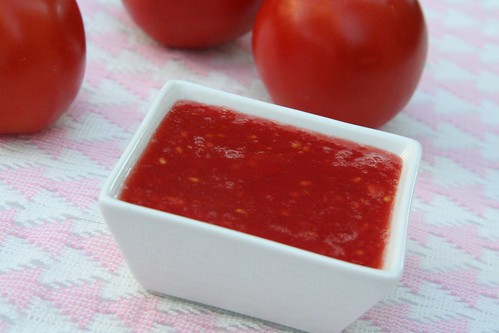
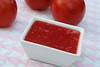
Tomato puree

Resulting Tomato Puree after grating

This handy trick which I have been using for a long time now goes to the Back to Basics event. The event was started here.

Thursday, January 17, 2008

Fat Free Feta

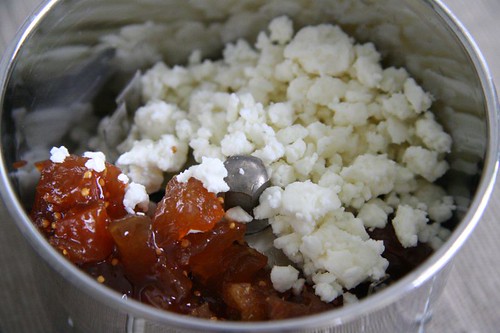
The intentions were very good, but the outcome wasn't impressive. That was the case with a fat free feta cheese that shall remain unnamed. Yes, yes, I know that fat free cheese is a complete oxymoron, but it was the start of the year, the time when one is trying to curb calories, and sometimes ready to sacrifice taste.

The taste isn't bad, but isn't great. No tang, no texture, none of that saltiness that comes with a good feta. I am not discounting it completely, and will continue to use it in salads, which will appear here from time to time, but otherwise, it is a lesson learned, for sure.

Apple Chutney and Feta Spread

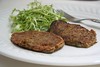
To see if it could be redeemed in some way I made a small amount of spread by processing the cheese together with some Apple Chutney, and it makes for a decent accompaniment to crackers for a small snack, but nothing to write home about.

Sunday, December 30, 2007

Crushed Peanuts

dANyAcha kUT

Focus on Crushed Peanuts
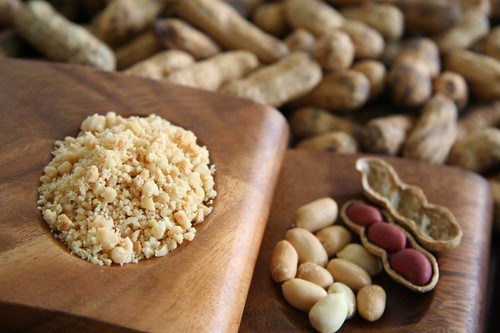
This picture is my entry to the Click event: Powdered peanuts ready for cooking are the focus here, with the peanuts a step below, and peanuts in their shell in the bokeh.

Peanuts are a staple in Marathi food and in a few other regional Indian cuisines as well, in many different forms, but the most common way of using them is either crushed or powdered. They are used in koshimbirs and salads, (a few recipes should be coming up), sabudana khichadi (a quick version of which is already a favorite) and other food that is eaten for fasts, for stuffings and gravies (not of the Thanksgiving variety!), in various snacks like besan coated, spiced and fried peanuts, and even in sweets. The list can go on.

In India, we used to buy the peanuts with the skin on them, which were then roasted at home in a thick kadhai. This caused the skin to blister and get brittle. When cooled, the peanuts were rubbed between palms to remove the skin, and then the skin could be separated from the nuts and discarded. The peanuts were then ready to be used for cooking. In the days before electrical gadgets, a large batch of the peanuts were pounded in a stone mortar to get a coarse powder which was then stored to be used.

Here, I buy roasted peanuts, which I quickly pulse a few times in the food processor as required. I rarely make a large batch to keep, just because it is so convenient to make some when I need it.

For times when you don't have a food processor, or might be too bothered to wash the bowls, there comes a tip from a friend who often reads this blog and sometimes comments. She says that you can put the requisite amount of peanuts in a strong 'ziplock' style plastic bag, close the bag after removing any excess air, lay it flat, and use a rolling pin to crush the peanuts inside the bag as coarse or fine as you like. Voila, powdered peanuts ready to be used in Maharashtrian and other dishes. I have tried it, and it really works well.

Focus on Peanuts
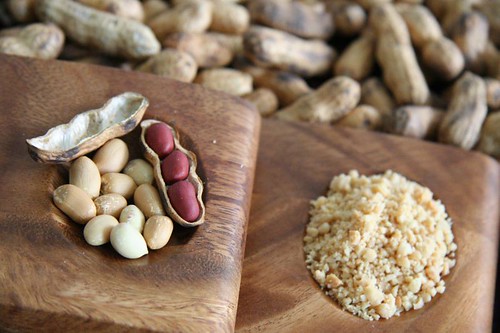
This is a picture with the peanuts in focus, and is not an entry to the Click event.

Tuesday, December 04, 2007

Baby vegetables in Cilantro Lemongrass broth

The only herb that is nearly always in my fridge, and most likely in other Indian fridges too, is cilantro. The first thing I do after getting cilantro home is trim off the hard stalk portion, then wrap the leafy part in a paper towel, and this package then goes off into a plastic box, to be used as required. The cilantro stays fine for a couple of weeks.

If the stalks are particularly healthy and fresh, and if I have even a few additional minutes, one of the things I like to do instead of throwing the stalks away is to drop them into a large pan of water and bring the water to a boil. Add a few chunks of ginger either bruised by a pestle or grated, a few crushed peppercorns, some salt, and within about 15-20 minutes, a rather delicious cilantro-ginger broth is ready. Once strained, it can be sipped just by itself, or used as a base for soups, dal, or noodle dishes.

Making broth

The variations on this simple basic are endless. Sometimes I add slices of lime or lemon to it, sometimes, a bay leaf. This time I used a couple of stalks of lemongrass, roughly cut into pieces and smashed, and let those boil with everything else, infusing the broth with the characteristic flavor of lemongrass.

Baby Vegetables

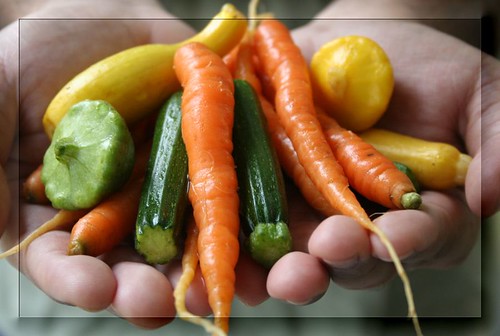
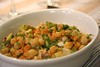
To it, I added some fresh baby vegetables, such as baby carrots small enough to fit in the palm of one's hand, along with various baby squashes like zucchini, yellow crookneck, sunburst and pattypan, all so tiny that they barely needed to be halved. I let the vegetables cook in the clear stock for a few minutes until they were fork tender, garnished with a bit of finely chopped cilantro, and an austerely beautiful and surprisingly satisfying first course was ladled out.

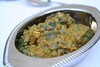
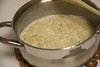
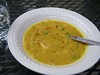
Soup

Tuesday, August 28, 2007

A note on coconut milk

In the good old days, coconut milk could have meant only one thing, and that is the milky extract got out of freshly scraped or shredded coconut.

Fast forward to this day and age and there are several easier options available, which are not a patch on the real thing, but unfortunately it is not always possible to get down to making your own when one is constrained for time and when the coconut available itself isn't that great.

So in order of preference, my choices are:

1. Fresh coconut milk, extracted out of a freshly shredded coconut
2. Coconut milk extracted out of frozen shredded coconut
3. Canned coconut milk or powdered coconut cream dissolved in water - depending on the usage, I prefer one over the other.
Related Posts Plugin for WordPress, Blogger...