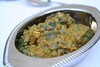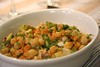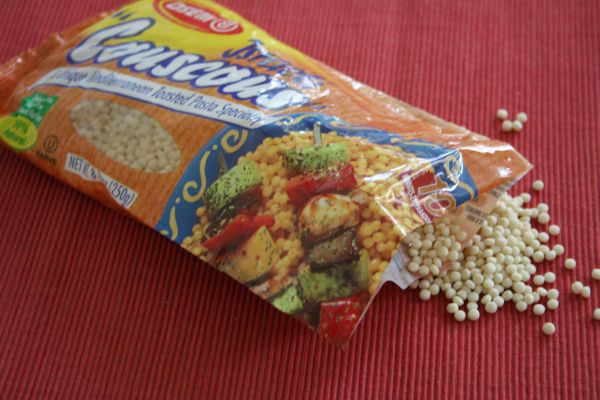
First of all, sabudana is made of sago, and Israeli Couscous which is also called pearl couscous is a toasted pasta. They are similar in appearance and size, but sabudana is white in color while the couscous is more of a light beige. Sabudana by itself does not have a strong taste, but it has a chewy texture that is very similar to that of cooked pearl couscous.
Sabudana khichadi in my book is on a pedestal. It is something I adore so much that I wouldn't mess with it, even for experiment's sake. But for a long time now it has been quite difficult for me to consistently find good quality sabudana that I know will not get powdery when soaked in water or get clumpy. In order to make khichadi, the grains have to absorb water and plump up, and stay separate. I suffered through several bad batches of sabudana, and in the quest to find the good stuff, I thought it may not be so bad to try out the couscous, and happily, the experiment worked! In fact, if I didn't tell someone what my key ingredient was, I am confident they would not be able to tell the difference. Having said that, I have found that the sabudana bought in India has worked the best for me so far.

To cook the couscous:
1-1/4 th cup of water
pinch of salt
1/2 teaspoon of ghee
1 cup of Israeli couscous
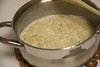
Heat the water in a small saucepan. When it comes to a boil, add the salt and ghee to it. Add the couscous, and cook for about 5-7 minutes. Then turn off the heat and cover the pan. When slightly cool, run a wooden spoon through the grains to separate them and spread them on a plate.
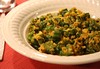
Once the couscous is cooked, I apply the classic, traditional sabudana khichadi formula to it.
For the khichadi:
1/2 cup of peanuts, coarsely powdered in a food processor
2 Tablespoons of grated coconut (optional)
salt to taste
1/2 teaspoon of sugar
2 Tablespoons of ghee
1 teaspoon of cumin seeds
2-4 small green chilies, chopped
1 small boiled potato (optional)
4 stalks of cilantro, finely chopped
Add the peanuts, coconut, salt and sugar to the couscous on the plate and mix evenly. If using the potato, chop it into small pieces.
Heat the ghee, and add the cumin seeds. When they start to sizzle, add the chilies and stir for a few seconds. Add the potato and stir it around till it gets coated with ghee. Add the couscous, and stir it until it get coated too. If needed, you can add a little more ghee at this point. Stir for just a few more minutes, and then add in the cilantro. It is best eaten right away, but leftovers heated in the microwave are fine too.
For the authentic version, check this post.